By Adam Palmer, TIA Energy. Last updated: 19 November 2026.
The short answer: A grid-tied solar system cuts the power you buy from the grid while the sun shines. It usually turns off when the grid is off. A hybrid system adds batteries. Then key machines can keep running, and you can use stored solar in the costly evening hours. Off-grid is for sites with no grid link at all.
A kWh (kilowatt hour) is one unit of power. It is the same unit you see on your power bill.
- Grid-tied solar cuts day units. It is the simplest and lowest cost setup.
- Hybrid solar adds batteries. It helps when costly units fall after dark, or when you pay for diesel.
- Eskom's evening peak is now 3 hours, up from 2 hours, on its main time of use tariffs (Eskom 2026/27 booklet).
- Export does not cut fixed or demand charges. It only earns a credit against energy you buy (NERSA net billing rules).
- Grid-linked systems must be registered, even if they never export (NERSA).
What is the difference between grid-tied and hybrid solar?
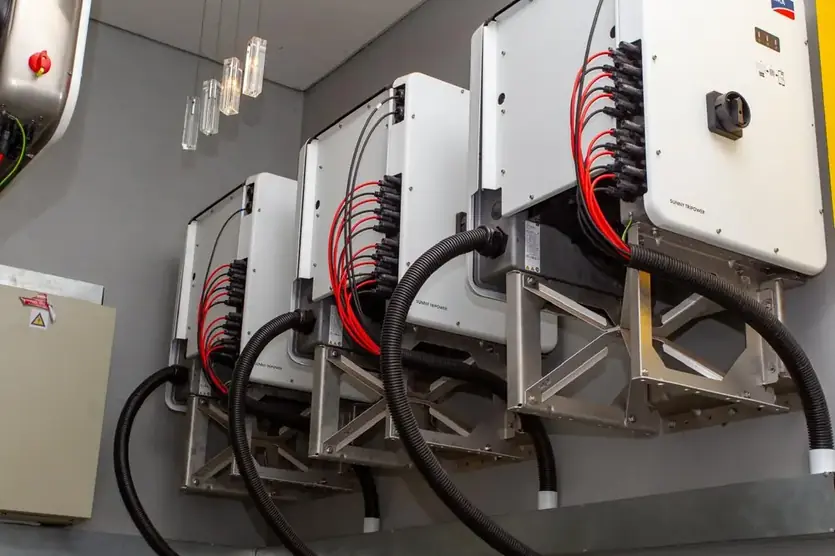
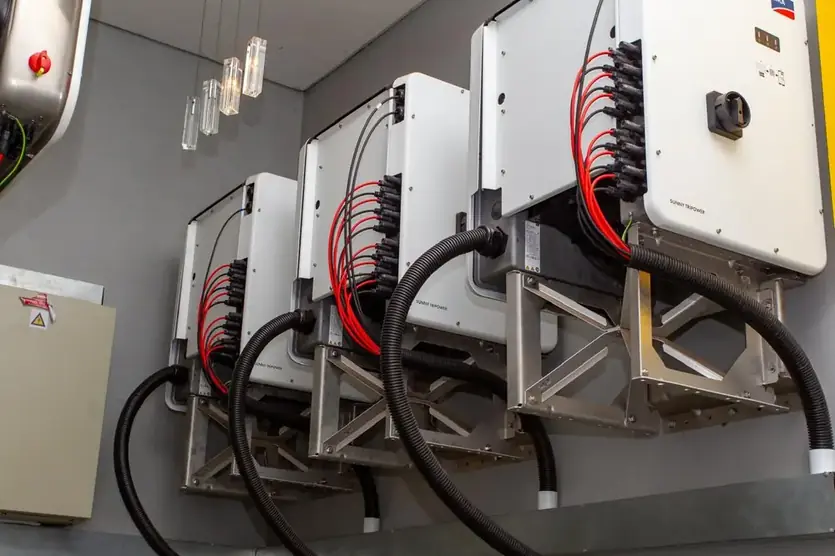
Both setups use the same panels. The big difference is the batteries, and what happens when the grid is off.
| Setup | What it does | Works when the grid is off? | Helps in the evening peak? | Good fit |
|---|---|---|---|---|
| Grid-tied | Panels and an inverter feed your main board in the day. You buy fewer units. | Usually no. The inverter turns off for safety. | No. Solar makes most power at midday. | Sites that use most power in the day, with no machines that must keep running. |
| Hybrid (solar plus batteries) | Same day savings, plus batteries that store solar for later. | Yes, for the loads on the backed-up board, if it is built that way. | Yes. Stored solar can cover costly evening units. | Sites with high evening use, diesel costs, or cold rooms, tills or lines that must not stop. |
| Off-grid | Solar, batteries and often a generator carry the whole site. | There is no grid. The system is the supply. | You buy no grid units at all. | Sites with no usable grid link. |
No prices are given here. A fair price can only come from your own bills and loads.
How does a grid-tied solar system work?
A grid-tied system has three main parts. Panels sit on the roof, a carport or the ground. An inverter turns their power into the kind your building uses. The inverter feeds your main board.
While the sun is up, the site uses solar first. It only buys from the grid what solar can not cover. At night, the site runs on the grid as normal.
A normal grid-tied inverter turns off when the grid goes down. This is called anti-islanding. It stops your system pushing power into a line that workers think is dead. Eskom says unregistered systems can feed power back into lines during faults, and put workers at risk (Eskom SSEG page).
Can I sell my extra solar back to the grid?
In some areas, yes, through net billing. But the credit is small in one key way. Under the NERSA net billing rules, power you export is only set off against energy you buy. It can not be set off against fixed, basic or demand charges (Government Gazette 52781, 30 May 2025, clause 7.1). So extra midday solar is often worth more if you store it and use it yourself.
What does "hybrid" mean on a commercial quote?
On a quote, "hybrid" should mean more than a word on a box. It should mean solar plus batteries, with a clear list of what stays on when the grid is off.
A good hybrid quote should show:
- The batteries, sized for the loads and the hours you want to cover.
- The inverter. It is either a hybrid inverter or one linked to the batteries on the AC side.
- A backed-up board. Only the chosen loads run from the batteries, not the whole site.
- A plan for when the batteries charge and when they are used.
The inverter must suit your supply and the loads it will carry. For a deeper look at inverter sizes and three-phase units, read our guide to three-phase hybrid inverters.
When are batteries worth it for a business?
Batteries cost money, so they need a job. They earn their keep when they cut costly units, cut diesel, or keep key machines running. Here are four simple checks.
1. Do your costly units come after dark?
Solar makes most of its power at midday. On time of use tariffs, the most costly units come in the morning and the evening peak. In its 2026/27 booklet, Eskom made the evening peak longer, from 2 hours to 3 hours. It made the morning peak shorter, from 3 hours to 2 hours. It also added a new 2 hour standard period on Sunday evening (Eskom Tariffs and Charges Booklet 2026/2027, Appendix A).
That means midday solar alone now misses more of the costly evening hours. Batteries can store solar and use it then. To see what each unit costs you, read our page on business power prices per kWh.
2. Do you pay for diesel?
If a generator runs when the grid is off, every hour costs fuel. Stored solar can take over some of those hours. Our guide to solar vs diesel cost per kWh shows how to work out your own generator cost per unit.
3. Are there machines that must not stop?
Think of cold rooms, tills, servers or a line that spoils product if it stops. These loads belong on a backed-up board. Size the batteries for these loads and the hours they need, not for the whole building.
4. When is solar on its own enough?
Grid-tied solar with no batteries can be the right first step when:
- Most of your power is used in the day.
- Your tariff does not have a big gap between peak and other hours.
- No loads must keep running when the grid is off.
Do not buy batteries just because a quote says "hybrid". Ask what the batteries will do on your tariff, and which loads they will carry.
Can I start grid-tied and add batteries later?
Sometimes, yes. But it is not automatic. It depends on the inverter, the board, and the space and cables left for batteries.
Ask three questions when you get a quote:
- Can this system take batteries later?
- What extra parts would that need?
- What would have to be replaced?
Get the answers in writing. If the first build leaves no room for batteries, adding them later can cost more than planning for them now.
Do grid-tied and hybrid systems need to be registered?
Yes, if they are linked to the grid. This is true even if they never export.
NERSA said this clearly on 2 February 2026 (NERSA media statement). Registration depends on the grid link and the size, not on export:
- A grid-linked system of 100 kW or less registers with the distributor. That is Eskom or your municipality.
- A grid-linked system of more than 100 kW registers with NERSA.
- A system with no grid link is exempt.
Eskom's own page uses kVA, not kW. It says systems up to 100 kVA register with the distributor, and larger ones with NERSA. Eskom asks for three main papers: a Certificate of Compliance (CoC), an NRS 097-2-1 type test certificate for the inverter, and an embedded generation installation test report (Eskom SSEG page).
For the steps in Gauteng metros, see our guide to SSEG registration in Johannesburg, Tshwane and Ekurhuleni.
What about safety and insurance?
Aon South Africa says a solar project needs an electrical CoC and engineering sign-off. It says this matters to prove the work met electrical and structural standards for insurance. Aon also sets out fire steps for sites with lithium-ion batteries (Aon South Africa, solar fire risks). Ask your installer who signs the CoC, who the engineer is, and how the batteries will be kept safe.
How does TIA help you choose?
TIA Energy is a South African commercial solar company based in Gauteng. We plan, build, switch on and look after solar and batteries for business sites. You can see named work, such as Honey Crest Mall, on our projects page.
We work with Herholdt's Group, a South African importer and wholesaler of electrical and solar products.
We do not pick grid-tied or hybrid first. We start from your bills, your tariff, your diesel use and the machines that must not stop. Then the design follows.
Frequently asked questions
What is a grid-tied solar system?
It is solar that works with the grid. Panels and an inverter feed your main board in the day. You buy fewer units from Eskom or your municipality while the sun is up.
Does grid-tied solar work when the grid is off?
Most of the time, no. A normal grid-tied inverter turns off for safety when the grid is off. It needs batteries or a generator, and the right design, to keep loads running.
Is hybrid solar better than grid-tied for a business?
Not always. Hybrid costs more because of the batteries. It pays off when your costly units come in the evening, when you burn diesel, or when some machines must not stop. If most of your power is used in the day, grid-tied solar can be enough.
What is the difference between hybrid and off-grid solar?
A hybrid system stays linked to the grid and also has batteries. An off-grid system has no grid link at all. Solar, batteries and often a generator must carry the whole site.
Can I add batteries to grid-tied solar later?
Sometimes. It depends on the inverter, the board and the space left for batteries. Ask for this in writing when you get your quote.
Do I need to register solar if I do not export?
Yes, if the system is linked to the grid. NERSA says registration depends on the grid link and the size, not on export.
Not sure if you need batteries, or only solar?
Send us a recent power bill. We will look at your tariff and tell you if grid-tied solar is enough, or if batteries make sense for your site.
Or contact us if you would rather talk it through.
Sources
- NERSA media statement, 2 February 2026: regulatory requirements for small-scale embedded generation
- Eskom Tariffs and Charges Booklet 2026/2027, Appendix A (time of use periods)
- NERSA Net-Billing Rules, Government Gazette 52781, 30 May 2025, clause 7.1
- Eskom Distribution: small-scale embedded generators
- Aon South Africa: solar fire risks

