
How it works: from a quick chat to a working system
One team, from the first chat to looking after your system for years.
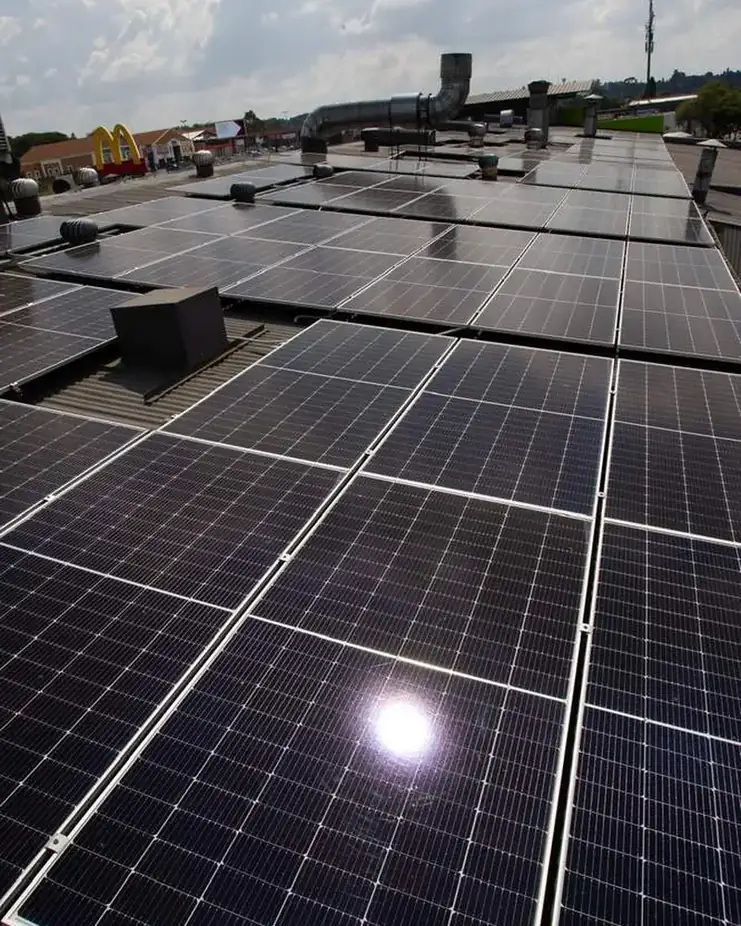
Site check
If solar makes sense, we come and look at your site. We check what power you use and what you pay, your building or land, and your water and borehole options.
Plan
We work out where the panels go, how many batteries you need and what pump suits your borehole. We draw up the plans you need for approval.
Parts
We buy the panels, inverters, batteries, pumps and frames, and bring them to your site, however far. We pick parts that can take heat, dust and a weak grid.
Build
Our own building and drilling crews put the system in. We work around your business, with a full safety file.
Switch on and test
We test the system, get it certified and check how much power and water it makes. We set up monitoring and give you all the papers.
Look after
We watch it, clean it and service it, so your solar, batteries and pumps keep making what they should. See maintenance →
Questions about the process
What happens on the quick chat?
Adam calls you for 15 minutes. He asks what you pay for power and diesel, how your site runs and if you need water. Then he tells you if solar makes sense and what comes next.
What do you need from me to start?
Just book a quick chat. It helps to have a recent power bill close by. If solar makes sense, we then come and look at your site.
Do I need municipal approval to install commercial solar?
Usually yes, if the system is connected to the grid. South African municipalities register these systems as small-scale embedded generation (SSEG). The City of Ekurhuleni, for example, requires written approval before installation starts and treats systems with export-blocking relays as grid-connected (Ekurhuleni guideline). Rules differ per supplier: in Johannesburg see City Power's SSEG page. Check with your supplier before buying equipment.
What happens when you switch it on?
We test the system, get it certified, check how much power and water it makes, set up monitoring and give you all the papers. Then you know what it should make, and you can track it.
Who installs the system?
TIA's own construction and drilling crews build the system, working around your operations with a full safety file. There are no hand-offs between subcontractors.